

Public School Civil Rights Liability: Protecting Students from Discriminatory Harassment and Abuse
Educating students is not the only responsibility of school districts. Federal and state laws require schools to be proactive about protecting student civil rights and to foster a positive learning environment free from discriminatory harassment and abuse.
Several federal laws, including Title VI of the Civil Rights Act of 1964, Section 504 of the Rehabilitation Act of 1973, Title II of the Americans with Disabilities Act of 1990, and Title IX of the Education Amendments Act of 1972 define the right of students to be educated in an environment free of discrimination based on disability, race, national origin, gender, and other protected characteristics. Discrimination is also defined as student-on-student harassment.
When harassment or abuse is severe and persistent enough to create a hostile school environment that interferes with a student’s civil rights and education, and when school staff know of such behavior and encourage, tolerate, do not adequately address, or ignore it, they are acting deliberately indifferent, in violation of federal laws. These violations can result in school civil rights liability.
What Are Examples of Discrimination in Schools?
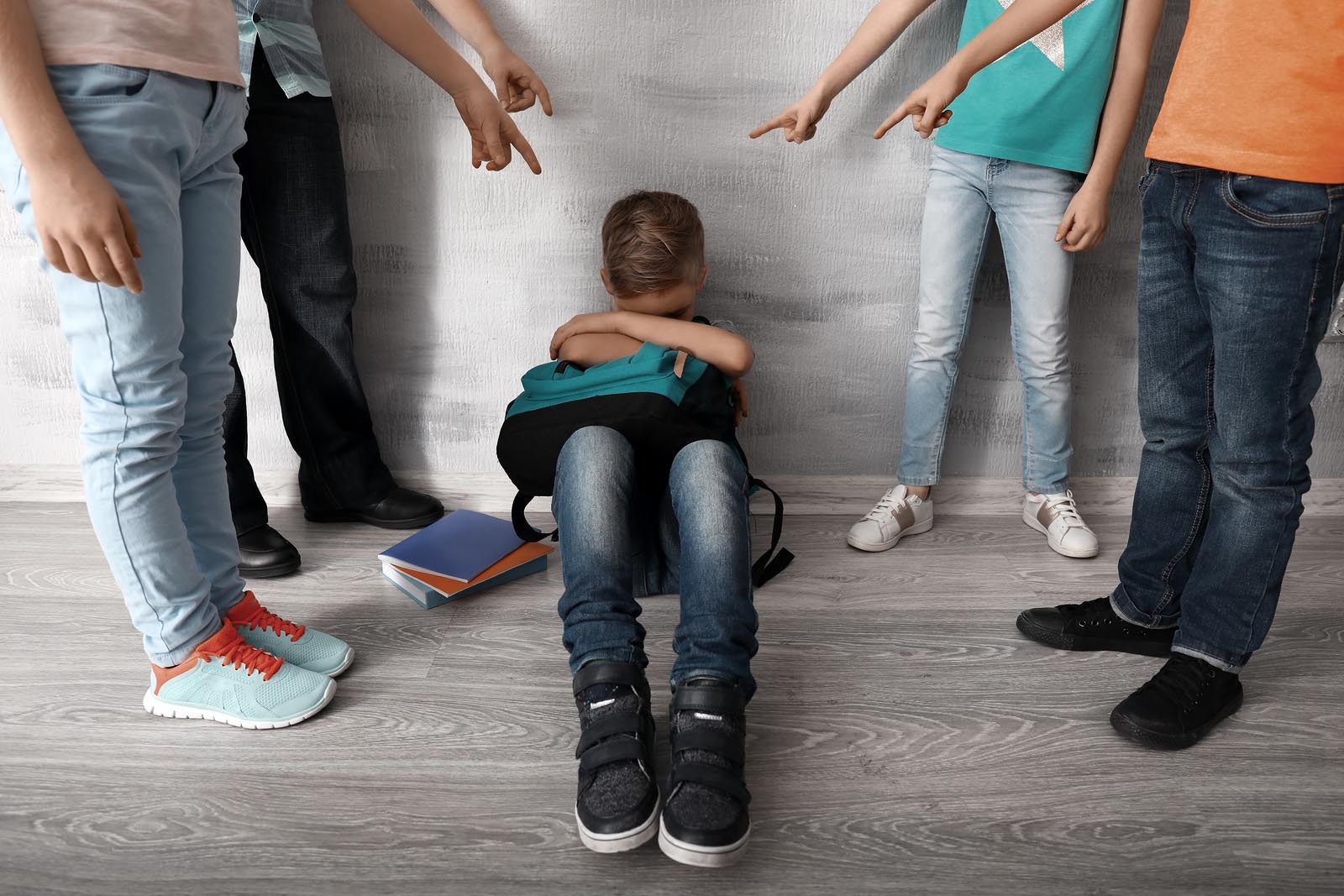
Discrimination is defined as student-on-student harassment or any offensive or unwelcome conduct targeted at students based on their protected characteristics. It can take many forms, such as verbal acts and name-calling, nonverbal behavior, such as graphic and written statements, conduct that is physically threatening, harmful, or humiliating, and more.
A public school civil rights liability lawsuit may arise when an institution is aware of but indifferent to this conduct. Consider these potential examples of discrimination in schools from our practice: an African-American student who claims that his school failed to respond appropriately to being called racially inappropriate names, or a Jewish student who claims discrimination after being exposed to swastikas on the wall in the locker room.
Besides being offensive or unwanted, discrimination is defined as student-on-student harassment or any conduct so severe, pervasive, and persistent as to foster a hostile school environment that denies a protected student equal access to educational opportunities or impacts his or her safety and well-being. Signs of a hostile school environment may include a student’s anxiety about going to school, a drop in grades, physical illness, suicidal attempts, and more. Discriminatory harassment or abuse can come from a student, a staff member, or the school, through its actions or inaction in a particular scenario.
A school’s civil rights liability may arise if an institution engages in potentially discriminatory harassment. Examples of discrimination in schools include a student with a disability being habitually restrained and secluded or excluded from attending a field trip. Physical and sexual abuse can also create a hostile learning environment and violate students’ civil rights.
So can the spread of rumors, such as when the school is abuzz about a female student said to be a slut who sleeps with her coach. Public school civil rights liability claims have also arisen from districts failing to establish robust policies to prevent harassment and abuse, or failing to respond to complaints and reports, in whole or in part, promptly.
School Responsibility in Preventing Discriminatory Harassment and Abuse
When the harassment or abuse is in plain sight, widespread, or well known to students and staff, when it takes place routinely in school hallways, during classes, during recess, during lunch, or on a school bus, its signs are prominent enough to put the school district on notice of actionable harassment that requires an immediate response.
In other cases, a district may become aware of a pattern of harassment or abuse after a single incident triggers an investigation that reveals additional incidents that may create a hostile environment. In all cases, failure to act on this knowledge will be interpreted as the school’s tacit approval of these behaviors, and the school may be held accountable for civil rights liability.

School districts must widely publicize adequate notice of their policies, procedures, and practices prohibiting harassment and for reporting, investigating, and resolving complaints. School districts have a legal responsibility not only to respond appropriately but also to be proactive in preventing harassment and discriminatory conduct by implementing practices that comply with standards governing student civil rights and discrimination.
Public school districts must provide training to the larger school community to ensure that all students, their families, and school staff members can recognize discriminatory harassment or abuse and know how to respond to and report it. School districts with 15 or more employees must designate a Title IX and Section 504 coordinator to disseminate information to parents, provide staff with training and information about harassment policies, and ensure that the district’s practices and procedures comply with state and federal laws.
This includes appropriately responding to parent complaints and ensuring that investigations are conducted and documented. Eventually, most public school civil rights liability issues can be avoided if institutions uphold practices consistent with the legal and professional standard of care.
Office of Civil Rights Standards for Protecting Students from Discriminatory Harassment
The U.S. Department of Education’s Office for Civil Rights (OCR) ensures equal access to education through enforcing student civil rights laws, including Title VI, Title II, and Title IX. Through guidance documents, policy statements, and other communications, OCR informs school districts and educational institutions receiving federal funds of their legal obligations to protect students’ civil rights. These resources are intended to assist districts in complying with the law to avoid school-related civil rights liability.
When OCR believes that “precedent-setting cases in the courts clarify specific elements of the application of the law,” the office issues a “Dear Colleague” letter and supplementary materials to help K–12 school districts and higher-education institutions understand how those court decisions affect them. OCR communications like these guide institutions and public school districts in adjusting their policies and practices to enhance civil rights protections and avoid school civil rights liability.
The professional standard of care binds school administrators in education administration and student supervision, and the standards distributed by OCR are derived from its legal interpretations. Based on my education, training, and professional experience, the community of education administration and student supervision professionals recognizes the practical methods, examples, and other information in OCR’s guidance documents as the marker for what is reasonable in terms of protecting students from discrimination and responding to complaints of discriminatory harassment, abuse, and other examples of discrimination in schools.
OCR guidance documents clearly and unambiguously inform school districts and other educational institutions about their obligations to protect students from sexual or disability-based harassment, restraint, and seclusion, and harassing and abusive conduct based on race or national origin. When a student experiences harassment, they may no longer have equal access to education because of the school environment created by such behavior.
School districts should implement substantial measures to curb deliberate or unintentional violations and minimize the risk of public school civil rights liability. The professional standard of care, including OCR’s standards and requirements under Title IX, Title VI, and Title II, requires that school districts effectively protect students from harassing and discriminatory conduct by:
- Developing policies and procedures meant to protect students from discrimination;
- Providing training to students, parents, and school employees so that they know to report discrimination or harassment to appropriate school officials and so that employees with the authority to address discrimination or harassment know how to respond appropriately;
- Publishing and widely disseminating notice of nondiscrimination and adopting and publishing clear grievance procedures that are easily accessible to parents, students, and school employees;
- Designating and appropriately training an affirmative action and/or compliance officer, such as a Title IX or Title II coordinator, responsible for participating in all investigations of discriminatory harassment, periodically assessing the district’s climate, and reviewing and ensuring the appropriateness of the district’s discriminatory harassment policies and procedures;
- Notifying all students and employees of the affirmative action and/or compliance officer’s name, title, and contact information, and publishing this information in all policies, regulations, student/staff handbooks, and other school publications;
- Taking immediate action to investigate and eliminate known or reported discrimination or harassment. To avoid public school civil rights cases, institutions that know or reasonably should know of discrimination that creates a hostile environment, not only for the victim but also for other students who witness acts of discriminatory harassment, should take steps to prevent its recurrence and address its effects;
- Recognizing that police investigations DO NOT satisfy the school’s obligation to investigate all instances of conduct that could potentially be discriminatory, whether a complaint is filed or the school learned of the conduct through indirect means, the school has a responsibility to investigate all reports, and
- Regularly examining the school community’s culture through surveys, interviews, and other means to determine whether there is a need to address discriminatory behavior that may violate the school’s civil rights.
Avoiding Costly School Civil Rights Liability Litigation
For schools, one key to protecting student civil rights lies in having policies and procedures that are accessible and reflect applicable laws and OCR guidance. Having no policy, an inadequate policy that doesn’t address legal requirements, or a policy that staff and students are not aware of or that is not enforced is a breach of the professional standard of care.
An institution that does not understand its duty to protect students or address sexual, racial, and other examples of discrimination in schools and abuse of students by staff or their peers demonstrates a breach of the professional standard of care. This breach and resulting student harm will strengthen a plaintiff’s public school civil rights liability claim.
Having clear and firm policies and administrative procedures, adequate staff and student training, a quick response to any observed or reported violation of student civil rights, and a hard look at the school culture will help protect a school from costly litigation.
Schools and personnel in the hierarchy of vicarious liability will be held strictly accountable for discriminatory harassment against a student when someone in a position to take remedial action knows of the behavior but deliberately ignores it. If the school complies with the professional standard of care, it will be in a stronger position to defend itself when faced with a claim that any of these laws were violated.
Find Trusted Expert Services for Public School Civil Rights Liability
Suppose you are a plaintiff or defendant attorney, educational institution, or parent seeking help with a student’s discriminatory harassment or abuse matter. In that case, our court-qualified expert witness services team at School Liability Expert Group is here to assist.
We have worked with hundreds of law firms throughout the United States and Canada on various education law and school civil rights matters in institutions and other child- and youth-serving agencies. We also have diverse experience across all facets of educational administration and supervision. As such, our expertise and output stand out in this field.
Our education expert witness services include expert trial and deposition testimony, specialist case review and analysis, comprehensive reports, and consultations.
Schools can seek our help to evaluate their program quality, provide compliance training to staff, and make the best recommendations to foster practices that minimize discriminatory harassment or abuse and the risk of costly public school civil rights liability lawsuits.
Book a call today to speak with an expert.